Mapping the Growth of Poker Promotions Through Cross-Border Casino Partnerships
Written by Ines Berger · Jun 6, 2026
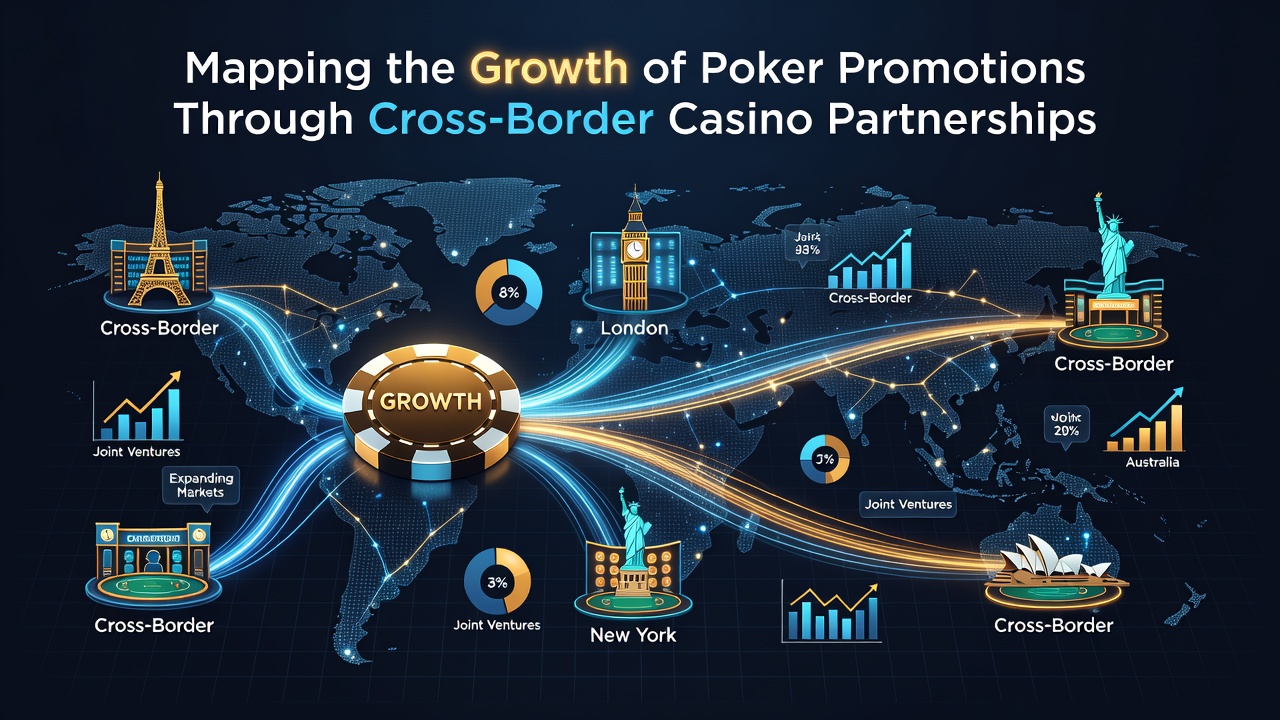
Mapping the Growth of Poker Promotions Through Cross-Border Casino Partnerships
Cross-border casino partnerships have expanded poker promotions by linking operators in separate regulatory jurisdictions, allowing shared player pools and coordinated bonus structures that single-market sites cannot replicate alone, and this pattern accelerated after 2023 when multiple European and North American platforms formalized agreements for joint tournament series and loyalty reward exchanges.
Early Development of Shared Promotion Models
Operators first tested cross-border promotion frameworks in the mid-2010s when platforms licensed in Malta began coordinating with Caribbean-facing brands to pool prize money for multi-table tournaments, and data compiled by the European Gaming and Betting Association shows that such arrangements increased average prize pools by 34 percent within two years of launch while maintaining compliance with each territory's player-fund protection rules.
Those early experiments relied on revenue-sharing clauses that allocated bonus contributions proportionally to player traffic from each partner, and similar structures later appeared in agreements between Canadian provincial operators and Australian online brands after 2021, demonstrating that the model scales across different time zones and player demographics without requiring unified licensing.
Expansion Patterns Observed Through 2025
By late 2025, partnerships had extended beyond simple prize pooling into layered promotion calendars where daily cashback offers issued in one jurisdiction automatically qualify players for weekly freerolls hosted on the partner site in another region, and figures released by the Canadian Gaming Association indicate that participating networks recorded a 27 percent rise in active poker accounts during the first full year of such synchronized campaigns.
What's interesting is how regulatory updates in several U.S. states facilitated these arrangements by clarifying rules around interstate player liquidity while still requiring separate geofencing for bonus redemptions, and observers note that this clarity encouraged additional operators to pursue similar cross-border deals with European counterparts ahead of the 2026 summer schedule.
Key Mechanisms Driving Promotion Growth
Partnership agreements typically specify shared KYC databases that reduce duplicate verification costs and enable instant bonus eligibility across borders once a player clears initial checks on either platform, and industry reports from the Australian Gambling Research Centre confirm that this integration lowered average onboarding times from 48 hours to under 12 hours for players moving between partnered sites.
Promotions themselves often feature progressive jackpot contributions that accumulate across both networks, creating larger rollover targets that attract recreational players who might otherwise avoid smaller standalone offers, and those structures have proven particularly effective in markets where local regulations cap single-site jackpot sizes but permit aggregated pools when funds originate from separate licenses.
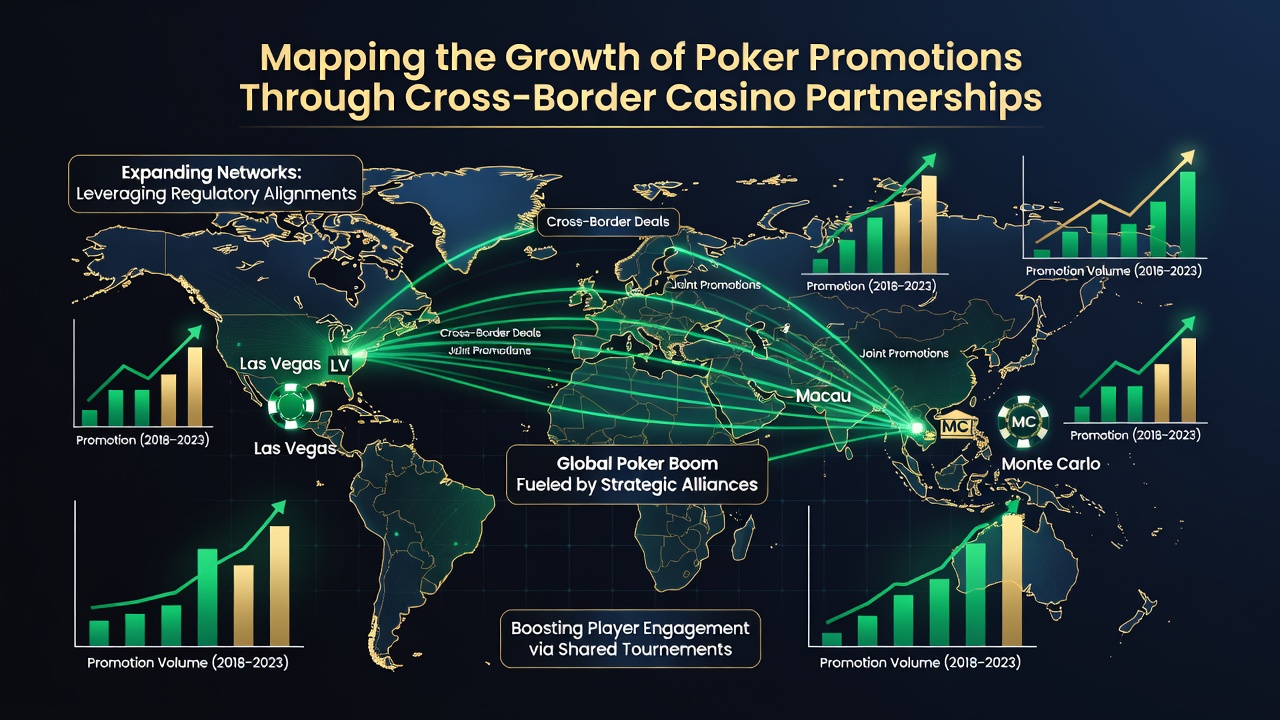
June 2026 marks the scheduled rollout of several new alliances that will extend these models into Latin American markets, where operators licensed in Curacao are finalizing data-sharing protocols with U.S.-facing brands to launch region-specific satellite tournaments feeding into larger international events.
Regional Variations in Implementation
European partnerships tend to emphasize loyalty point transfers that let players redeem rewards earned on one site for tournament entries on the partner platform, while North American arrangements focus more on deposit-match bonuses that stack across borders provided each transaction complies with the stricter of the two jurisdictions' deposit limits. Australian operators, by contrast, have prioritized shared bad-beat jackpots that trigger only when hands meet criteria verified through a joint auditing system, and records from the Australian Gambling Research Centre show these jackpots triggered 19 times in 2025 compared wth just four instances the previous year under independent operation.
Those who've studied the data note that the variation reflects differing tax treatments and responsible-gaming reporting requirements rather than any single best practice, yet the underlying principle remains consistent: promotions grow in scale and frequency when operators share both player traffic and promotional liability.
Conclusion
Cross-border casino partnerships have created measurable expansion in poker promotion volume and variety by connecting previously isolated player bases and regulatory frameworks, and the pattern is expected to continue through 2026 as additional jurisdictions clarify rules around shared liquidity and bonus accounting. The evidence from multiple industry sources demonstrates that these arrangements deliver larger prize pools and more frequent offers without violating local compliance standards, and the ongoing development of synchronized calendars suggests further integration ahead.