Regulatory Connections: US Poker Networks Fueling Live Dealer Growth Across Europe
Written by Eden Brooks · Aug 24, 2026

Regulatory Connections: US Poker Networks Fueling Live Dealer Growth Across Europe
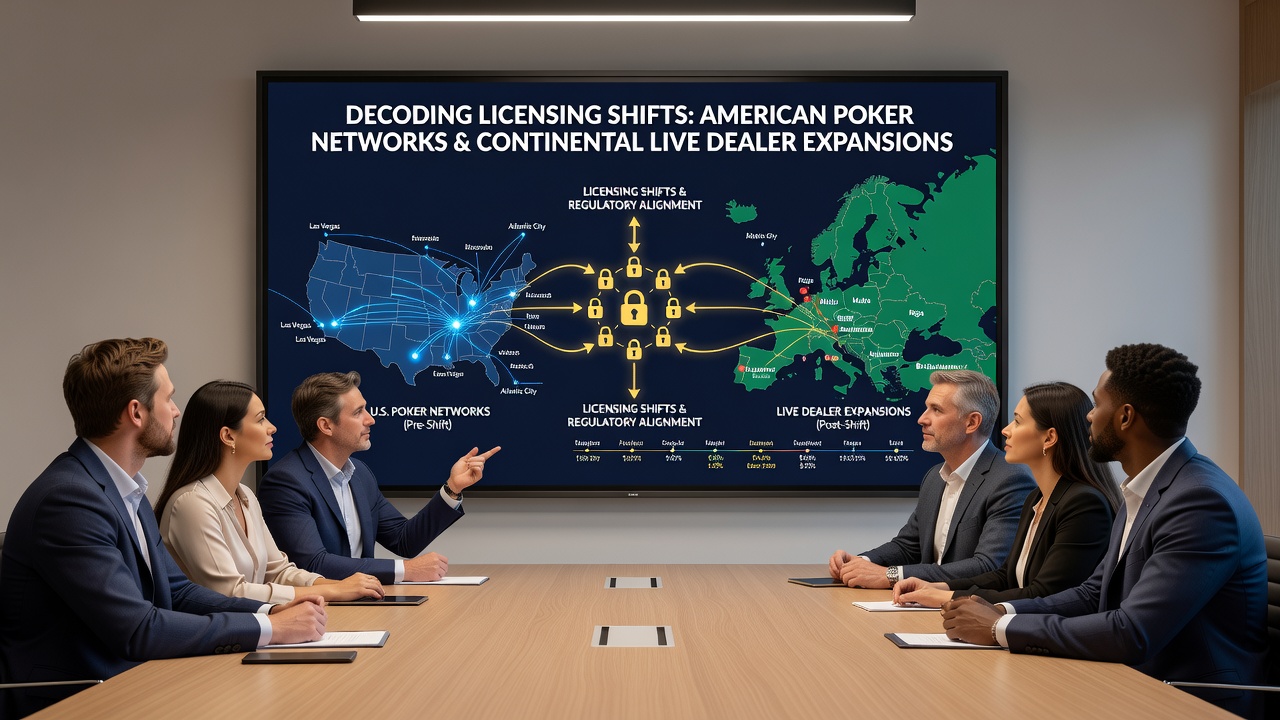
American poker networks have navigated a patchwork of state-level licensing requirements since the 2010s, and recent adjustments in those frameworks now intersect with regulatory pathways that support continental live dealer expansions. Data from the New Jersey Division of Gaming Enforcement shows that interstate poker compacts established in 2021 expanded player pools across participating states, creating revenue streams that operators later directed toward European market entries. Those same operators obtained Maltese and Romanian licenses to launch live dealer tables, while maintaining compliance with US state rules on player verification and anti-money laundering protocols.
State-Level Poker Licensing Patterns
Observers note that Pennsylvania and Michigan followed New Jersey's model by implementing shared liquidity agreements, and this approach generated measurable increases in handle volume according to figures released by the Pennsylvania Gaming Control Board in mid-2025. Operators such as those running WSOP.com and PokerStars Michigan adapted their software platforms to accommodate both domestic poker traffic and the technical standards required for European live casino feeds. The result appears in licensing applications that list dual compliance structures, allowing the same backend systems to serve US poker rooms and continental live dealer studios without separate code bases.
European Live Dealer Market Entry Points
Continental regulators in Romania and Malta updated their remote gaming directives between 2023 and 2025 to accept operators already vetted by US state commissions, provided those operators supplied audited financials and responsible gaming reports. Research compiled by the European Gaming and Betting Association indicates that several American-facing poker networks secured Class 1 or Class 2 Maltese licenses during this window, then deployed live dealer roulette and blackjack tables targeted at German and Dutch players. These moves coincided with a documented rise in licensed live dealer tables across the continent, reaching more than 1,200 active streams by early 2026.
Shared Technology and Compliance Infrastructure
Shared liquidity poker networks already maintained robust age-verification and geofencing tools mandated by US states, and these same tools satisfied the technical audits required under the EU's 2014 Remote Gambling Directive updates. Companies that operate both US poker rooms and European live dealer sites therefore reduced redundant compliance costs, according to filings submitted to the Nevada Gaming Control Board. One documented case involved an operator migrating its existing poker database architecture to support live dealer streams in multiple languages, completing the transition within nine months of receiving its Maltese authorization in 2024.
August 2026 Regulatory Milestones
Pending rule changes scheduled for August 2026 in both Michigan and New Jersey will require enhanced data-sharing agreements between state regulators and foreign licensing bodies. These changes align with ongoing discussions at the European Commission concerning mutual recognition of gaming audits, and preliminary guidance released in 2025 suggests that operators holding valid US state poker licenses could receive expedited review for additional European live dealer permits. Figures released by the Canadian Gaming Association show similar cross-border licensing trends emerging in Ontario, where poker network operators have begun testing live dealer partnerships that mirror the US-to-Europe pattern.
Operator Case Examples
Take one network that launched interstate poker in 2022 and subsequently obtained a Romanian live dealer license in 2025; public filings reveal that its US poker revenue funded studio construction in Bucharest while the same entity maintained separate corporate entities to satisfy state-level ownership restrictions. Another operator, already active in Pennsylvania poker, expanded its existing Maltese license to include live dealer blackjack tables for Spanish and Italian markets, citing integrated risk-management systems originally built for US compliance. These examples illustrate how licensing shifts create parallel revenue channels rather than isolated market plays.
Conclusion
Licensing adjustments in American poker jurisdictions continue to intersect with continental live dealer frameworks through shared compliance tools, revenue allocation strategies, and mutual recognition discussions scheduled to advance in August 2026. Data from multiple regulatory bodies demonstrates that operators leveraging these connections maintain distinct corporate structures while deploying unified technology stacks across both regions. The pattern remains visible in license applications, financial disclosures, and technical audit reports that span US state commissions and European authorities.