Regulatory Frameworks Governing Poker Promotions in Cross-Atlantic Gaming Jurisdictions
Written by Ulrich Zimmermann · Aug 12, 2026
Regulatory Frameworks Governing Poker Promotions in Cross-Atlantic Gaming Jurisdictions
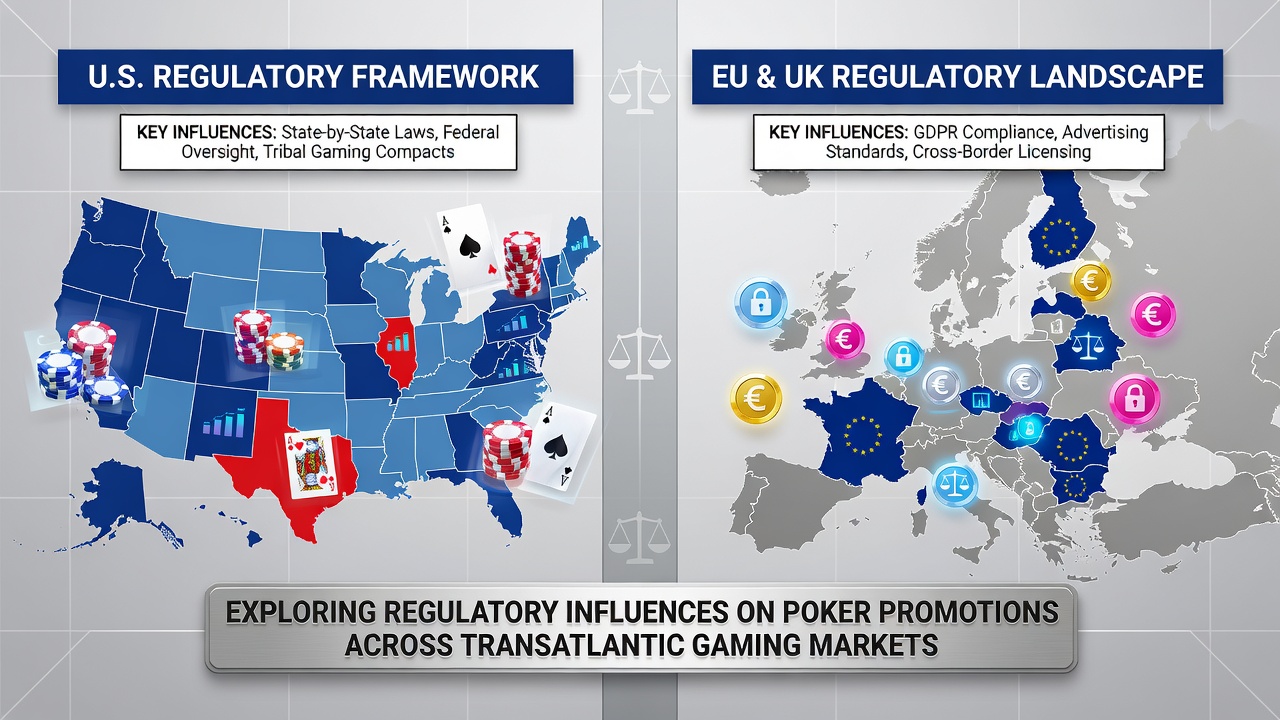
Regulatory frameworks in the United States and European markets exert substantial control over how operators structure poker promotions, including welcome bonuses, reload incentives, and tournament overlays, because licensing authorities impose specific requirements on advertising claims, bonus terms, and player eligibility. These rules vary sharply by jurisdiction, with American states often setting their own standards while European countries follow a mix of national laws and broader EU guidelines on consumer protection and fair play.
State-level oversight in the US creates a patchwork where operators must adapt promotions to comply with local statutes, whereas European regulators tend to emphasize standardized disclosures across borders even as individual nations retain authority over licensing and enforcement. Data from regulatory filings shows that promotion approval processes can take weeks in certain US states compared to faster reviews in some EU member states, and this difference influences how quickly new incentives reach players.
United States State Regulations and Promotion Constraints
Each US state that permits online poker maintains its own set of rules on bonus structures, with many requiring operators to disclose wagering requirements in clear language and to cap the maximum value of promotional offers. New Jersey's Division of Gaming Enforcement, for instance, mandates that all marketing materials include responsible gaming messages and prohibits promotions that target minors or use misleading language about winning probabilities. Similar requirements appear in Pennsylvania and Michigan, where regulators review bonus terms before operators launch campaigns.
Operators must also navigate federal statutes such as the Unlawful Internet Gambling Enforcement Act, which indirectly shapes promotion strategies by restricting payment processing options and prompting companies to focus on state-licensed platforms. Recent filings indicate that several multistate operators adjusted their August 2026 promotion calendars to align with updated reporting deadlines in multiple jurisdictions, illustrating how compliance calendars drive marketing timelines.
European National Approaches and Cross-Border Considerations
European regulators apply a combination of national licensing regimes and EU directives on consumer rights and data protection, which together determine how poker promotions can be advertised and delivered. Malta and Sweden maintain detailed guidelines on bonus transparency, requiring operators to display wagering requirements upfront and to offer self-exclusion tools alongside promotional offers. These rules aim to prevent aggressive marketing that could encourage excessive play.
Observers note that the European Commission has issued guidance on online gambling that encourages consistent standards for advertising across member states, although enforcement remains primarily a national responsibility. Industry reports reveal that operators licensed in multiple European countries often standardize certain promotion elements, such as age verification steps and bonus expiration policies, to satisfy the strictest requirements in their portfolio of licenses.

Impact on Bonus Structures and Player Eligibility
Regulatory demands directly affect the size, type, and accessibility of poker promotions because authorities often limit how much operators can offer relative to deposits or require minimum play periods before withdrawals. In several US states, promotions tied to live events or multi-table tournaments must include specific disclaimers about odds, while European rules frequently require operators to separate promotional funds from player deposits in accounting records.
Eligibility criteria also reflect regulatory priorities, with many jurisdictions mandating strict identity verification before players can claim bonuses. This practice reduces the appeal of promotions that once allowed quick sign-ups, and it has led operators to develop tiered offers that unlock additional benefits only after verification steps are complete. Figures from licensing bodies show increased compliance costs for operators that run simultaneous promotions across both continents.
Advertising Standards and Responsible Gaming Integration
Both regions impose advertising standards that require promotions to avoid targeting vulnerable groups and to include clear information about terms and conditions. US state regulators frequently review marketing creatives for compliance before campaigns launch, while European authorities conduct post-publication audits and can impose fines for violations. These oversight mechanisms influence the language used in emails, social media posts, and website banners.
Integration of responsible gaming features into promotions has become standard practice, with many operators required to link bonus offers to deposit limits or reality checks. Research from academic institutions tracking gambling behavior indicates that such integrated approaches appear more frequently in markets with mature regulatory frameworks, suggesting that policy design shapes both operator behavior and player interaction patterns.
Future Developments Expected by August 2026
Anticipated updates in several jurisdictions point toward greater harmonization of disclosure requirements for poker promotions, particularly around the presentation of wagering requirements and bonus expiration dates. Regulatory bodies on both sides of the Atlantic have signaled intentions to review existing guidelines, which may result in revised templates for operators to follow when advertising incentives.
Industry associations have published position papers outlining potential changes, and these documents highlight the need for clearer rules on cross-border player acquisition campaigns. As August 2026 approaches, operators continue to monitor legislative proposals that could affect how promotions are funded and reported in financial statements submitted to licensing authorities.
Conclusion
Regulatory influences on poker promotions across transatlantic markets create distinct operational environments that operators must navigate through careful compliance planning and localized marketing strategies. Differences in approval timelines, disclosure standards, and responsible gaming mandates continue to shape the types of incentives available to players in each region. Ongoing developments through 2026 are expected to refine these frameworks further while maintaining the core focus on consumer protection and market integrity.